


Wednesday, August 25, 2010
Thursday, August 19, 2010
Tips for Getting Better Sleep..How to Sleep Well Every Night
Do you have trouble falling asleep or do you toss and turn in the middle of the night? Do you wake up too early or find yourself feeling unrefreshed in the morning? If so, you’re not alone: millions of people struggle with falling and staying asleep. But by learning how to avoid common pitfalls that get in the way of sleep and adopting a few sleep-inducing techniques, you can start to enjoy restful, quality sleep. Developing a bedtime routine, creating a better sleep environment, managing stress and anxiety, following a sleep schedule, and taking better care of your body all set the stage for getting quality rest every night.
How much sleep do I need?
Read Understanding Sleep for more information on sleep needs and cycles.
Do you have a realistic idea of how much sleep you need? A general guideline for adults is 7-8 hours of sleep a night. Older adults need a similar amount, but the sleep may be lighter and may include a brief nap during the day. If you are consistently waking up groggy and exhausted, that’s a signal that you may need to up your sleep intake. If you’ve been sleep deprived, it may take a few days of heavier sleeping before you can get a sense of your average sleep needs.
What happens when you don’t get enough sleep
With a packed schedule, trying to squeeze as many hours of possible into the day is sorely tempting. However, when you continuously don’t get the amount of sleep you need, you begin to pay for it in many ways:
Impaired mood, memory, and concentration. When you don’t get enough sleep, you’re less productive, not more. Lack of sleep affects your ability to concentrate and remember things. What’s more, it makes you irritable and cranky. As a result, you’re social and decision-making skills suffer>
Dampened immune system. Without adequate sleep, the immune system becomes weak, making you more vulnerable to colds, flu, and other infections and diseases. And if you get sick, it takes you longer to recover.
Increased risk of accidents. Did you know that driving while seriously sleep deprived is similar to driving while drunk? The lack of motor coordination associated with sleep deprivation also makes you more susceptible to falls and injury.
Getting better sleep tip 1: Create a better sleep environment
If you think you’re getting enough sleep, but you have trouble waking up in the morning, struggle with daytime sleepiness, or feel tired and cranky despite clocking plenty of hours in bed, you may not be getting enough of the deep restorative sleep your body needs. In order to deepen your sleep and minimize disruptions during the night, you may need to make some changes to your sleep environment.
Your bed
Is your bed large enough? You should have enough room to stretch and turn comfortably, including with a bedmate present.
Your mattress, pillows, and bedding. Waking up with a cramp in your back or a sore neck? Experiment with different levels of mattress firmness, foam toppers or egg crate toppers, and pillows that provide more support.
Your room
Keep the noise level down. Too much noise—loud outside conversations, televisions blaring, music, traffic—can make it difficult to sleep well. If outside noise can’t be blocked, try masking it with a fan, white noise, or recordings of soothing sounds. Earplugs may also help.
Keep your room dark during sleep hours. When it’s time to sleep, make sure that your environment is dark. Even dim lights—especially those from TV or computer screens—can confuse the body clock. Heavy shades can help block light from windows, or you can try an eye mask to cover your eyes.
Room temperature and ventilation. If you can, experiment with the room temperature. Most people sleep best in a slightly cooler room with adequate ventilation. Check your windows and doors to make sure that drafts are not interfering with sleep.
Reserve your bed for sleeping. If you associate your bed with events like work or errands, it will only make it harder to wind down at night. Use your bed only for sleep and sex.
Getting better sleep tip 2: Develop a relaxing bedtime routine
Even with the stresses of daily life, if you make an effort to relax and wind down before bed, you will sleep easier and more deeply. A consistent, relaxing routine before bed sends a signal to your brain that it is time to wind down, making it easier to fall asleep. Make the time before sleep a time of peace and quiet, and find your unique routine that relaxes you.
1)To prepare for sleep, try
2)Reading a light, entertaining book or magazine
3)Listening to soft music
4)Making simple preparations for the next day
5)A light bedtime snack, a cup of hot tea, or a glass of warm milk
6)Hobbies such as knitting or jigsaw puzzles
7)Listening to books on tape
Television
Many people use the television to fall asleep or relax at the end of the day. You may even have a television in your bedroom. However, television actually stimulates the mind, rather than relaxing it:
Late night news or prime time shows frequently have disturbing, violent material. Even non-violent programming can have commercials which are jarring and louder than the actual program.
Light and noise. The continuous flickering light coming from the TV (or a computer screen) can interfere with the body’s clock, which is sensitive to any light. Television is also noisy, which can disturb sleep if the set is accidentally left on.
You may be so used to falling asleep with the TV that you have trouble without it. Although the first few days might be difficult, the payoff is better sleep in the long run. If you miss the noise, try turning on soft music or a fan. If your favorite show is on late at night, record it for viewing earlier in the day.
Getting better sleep tip 3: Get stress and anxiety under control
Do you find yourself unable to sleep or waking up night after night? Residual stress, worry, and anger from your day can make it very difficult to sleep well. When you wake up or can’t get to sleep, take note of what seems to be the recurring theme. That will help you figure out what you need to do to get your stress and anger under control during the day:
If you can’t stop yourself from worrying, especially about things outside your control, take steps to learn how to manage your thoughts. For example, you can reframe why worrying is harmful rather than helpful and practice replacing worrying with more productive thoughts. Read: How to Stop Worrying: Self-Help for Anxiety Relief
If the stress of managing work, family, or school is keeping you awake, you need help with stress management. By learning how to manage your time effectively, handle stress in a productive way, and maintain a calm, positive outlook, you’ll be able to sleep better at night. Read: Stress Management: How to Reduce, Prevent, and Cope with Stress
If you wake up frustrated and angry with loved ones or colleagues—rehashing arguments over and over—you may need help managing your anger. Even if you later scoff at yourself for these thoughts, don’t be too quick to dismiss them. It may mean you have feelings of anger under the surface that needs to be addressed. Read: Anger Management: Tips and Techniques for Getting Anger Under Control
Relaxation techniques for better sleep
Relaxation is beneficial for everyone, but especially for those struggling with sleep. Practicing relaxation techniques before bed is a great way to wind down, calm the mind, and prepare for sleep. Some simple relaxation techniques include:
Deep breathing. Close your eyes—and try taking deep, slow breaths—making each breath even deeper than the last.
Progressive muscle relaxation. Starting at your toes, tense all the muscles as tightly as you can, then completely relax. Work your way up from your feet to the top of your head.
Visualizing a peaceful, restful place. Close your eyes and imagine a place or activity that is calming and peaceful for you. Concentrate on how relaxed this place or activity makes you feel.
Getting better sleep tip 4: Learn how to get back to
sleep
It’s normal to wake briefly during the night. In fact, a good sleeper won’t even remember it. But if you’re waking up during the night and having trouble falling back asleep, the following tips may help.
Getting back to sleep
Stay relaxed: The key to getting back to bed is continuing to cue your body for sleep. Some relaxation techniques, such as visualization and meditation, can be done without even getting out of bed. The time-honored technique of “counting sheep” works by engaging the brain in a repetitive, non-stimulating activity, helping you wind down.
Do a quiet, non-stimulating activity: If you’ve been awake for more than 15 minutes, try getting out of bed and doing a quiet activity. Keep the lights dim so as not to cue your body clock that it’s time to wake up. A light snack or herbal tea might help relax you, but be careful not to eat so much that your body begins to expect a meal at that time of the day.
Don’t stress about it: Hard as it may be, try not to stress over an inability to fall asleep again, because that very stress and anxiety encourages your body to stay awake. Remind yourself that although it’s not a replacement for sleep, rest and relaxation still can help rejuvenate your body. Concentrate on relaxation, not sleep.
Sleep medications can get in the way of better sleep
If only sleeplessness could be completely cured by a simple pill! There are certainly plenty of over-the-counter sleep aids and prescription sleeping pills. However, they aren’t meant for long-term use. Sleep medications can cause side effects and even rebound insomnia, where your sleep ends up worse than before. If you must take a sleep aid, work carefully with your healthcare professional. And remember that good sleeping habits have more of an impact than medication.
Read Sleeping Pills, Sleep Aids and Medications: What You Need to Know
Getting better sleep tip 5: Optimize your sleep schedule
Make sure you are not going to bed too early.What do you do after a long, hard day, when you’re barely able to stay awake during dinner? Do you crawl into bed as soon as you can or fall asleep on the couch, only to wake up later in the night and have trouble getting back to sleep? Your body goes through cycles of alertness and drowsiness later in the day as your bedtime nears. So even if you are sleepy early in the evening, do something mildly stimulating to prevent yourself from falling asleep at that time, like doing dishes or getting clothes ready for the next day. If you push though that window, you’ll catch your second wind soon and be able to stay awake until your normal bedtime—and sleep through the night.
Set a regular bedtime
Time of day serves as a powerful cue to your body clock that it is time to sleep and awaken. Go to bed and wake up at the same time each day, and it will be easier and easier to fall asleep. Make your bedtime when you are normally feel tired, so that you don’t toss and turn. Try not to break this routine on weekends when it may be tempting to stay up late or sleep in. If you want to change your bedtime, help your body adjust by making the change in small daily increments, such as 15 minutes earlier or later each day.
Limit napping
Perhaps the English had the right idea in having teatime in the late afternoon when you naturally get sleepy. Some people, especially older adults, can take a short afternoon nap and still sleep well at night. However, if you are having trouble sleeping at night, try to eliminate napping. If you must nap, do it in the early afternoon, and sleep no longer than about thirty minutes.
Getting better sleep tip 6: Improve your diet
Taking care of your body can have a big impact on the quality of your sleep. You’ll sleep more deeply if you watch what you eat before bed and exercise regularly.
Eating right for sleep
A rich, hearty dinner, topped off with a big slice of chocolate cake might seem like the perfect way to end the day, but it’s wise to avoid eating a large meal within two hours of bed. Try to make dinnertime earlier in the evening, and avoid heavy, rich foods as bedtime snacks.
Light snacks for bedtime
A light snack before bed can help promote sleep. When you pair tryptophan-containing foods with carbohydrates, it helps calms the brain and allows you to sleep better. For even better sleep, try adding extra calcium to your dinner or nighttime snack. Experiment with your food habits to determine your optimum evening meals and snacks.
Sample bedtime snacks to help you sleep:
1)Glass of warm milk and half a turkey or peanut butter sandwich
2)Whole-grain, low-sugar cereal or granola with low-fat milk or yogurt
3) banana and a cup of hot chamomile tea
Substances and eating habits that can interfere with sleep
Too much food, especially fatty, rich food. These take a lot of work for your stomach to digest and may keep you up. Spicy or acidic foods in the evening can cause stomach trouble and heartburn.
Too much liquid. Drinking lots of fluid may result in frequent bathroom trips throughout the night.
Alcohol. Many people think that a nightcap before bed will help them sleep. While it may make you fall asleep faster, alcohol reduces your sleep quality, waking you up later in the night. To avoid this effect, so stay away from alcohol in the hours before bed.
Caffeine. You might be surprised to know that caffeine can cause sleep problems up to ten to twelve hours after drinking it! Consider eliminating caffeine after lunch or cutting back your overall intake.
Smoking. Smoking causes sleep troubles in numerous ways. Nicotine is a stimulant, which disrupts sleep. Additionally, smokers actually experience nicotine withdrawal as the night progresses, making it hard to sleep.
Getting better sleep tip 7: Get regular exercise
Aside from many other wonderful mental and physical health benefits, regular exercise can also make it easier to fall asleep and sleep better. You don’t have to be a star athlete to reap the benefits—as little as twenty to thirty minutes of activity helps. And you don’t need to do all thirty minutes in one session. You can break it up into five minutes here, ten minutes there, and still get the benefits. A brisk walk, a bicycle ride or a run is time well spent.
However, be sure to schedule your exercise in the morning or early afternoon. Exercising too late in the day actually stimulates the body, raising its temperature. That’s the opposite of what you want near bedtime, because a cooler body temperature is associated with sleep. Don’t feel glued to the couch in the evening, though. Exercise such as relaxation yoga or simple stretching shouldn’t hurt.


Friday, August 13, 2010
Mirror Of Refection..
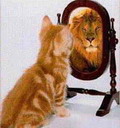
Do you live to your fullest potential today? Have you learn to discover your potential?
These are the questions that was typically asked to discover how well you know yourself and is the self perception is consistent with the others’ perception.
So, how well do you know yourself? What is your likes and dislikes? What is your value, what’s holding you back, what’s keep you awake at night, what drives you? Sound like a simple question? But unless you know yourself well, these are tough questions to answer!
How do you discover your potential and get to your yourself better?
1) Self reflection and self examination
2) Take a personality test
3) Ask others: close friends, family members, someone who know you, your colleagues
4) Keep a journal: to understand yourself, your feeling in diary/blog
1) Self reflection and self examination.
Take time to know yourself. You can start with writing down it in a piece of paper. Break it into what do you like, dislike, interests, strengths, weaknesses, fears, dreams, values etc. Break it down further to where do you think you are today, where do you think you want to be (vision/goals).
Then, put a picture in it.. e.g. you want to own a house 1 year from now, find a photo of your dream house and paste it to the paper. Picture helps us to visualise the goal clearer, and also help in visualise the paths to get there.
Pin the papers to board/mirror where you can see it everyday. Keep adding to it as and when you discover more stuffs about yourself. Or you can strike it off, when the priority change and the vision/goals/interest becomes invalid.
2) Personality Test
There are lots of personality test / quizzes available in the web to help you to get to know yourself and discover your potential. The internet has a rich sources of both free or paid personality test and assessments. Taking them help you to better understand how you think, make decisions, interact with people, choices of career/mate, your passions and interests etc.
3) Asks Others
Is your perception about yourself consistent with others? What do other think of you, and your strengths? Who is best to ask if it is not your close friend, your family member. Your colleague can help to give you some perspective from career/work standpoint. Think about this – if you have to find a character witness, who would that be? And why? And what do you think that person would say about you?
The consistency of various perceptions of others about you and your own perception may probably shows how well you know yourself.
4) Keep a journal
Learning about yourself is a lifetime journey. You will evolve, your needs and wants change overtime and what’s you today may not be who you will be in future. Although some key characteristics will always be there. Therefore keeping a blog/diary help you to continuously assess yourself and to appreciate the changes in you. Keep a blog, keep it interesting!
There are free blog resources online that you can use. There are some of the examples:
- Blogger: Create your free blog (https://www.blogger.com/start)
- Thoughts.com - Free Blog (http://www.thoughts.com/free-blog)
Enjoy the journey of discovering your true self!
Thursday, August 12, 2010
Wat is Death..
What is dying?
The verb "to die" comes from the Indo-European base dhue-, which means to pass away, become senseless. Dying is a natural part of living. Dying is the personal experience of the being letting go of its physical body.
Being with the dying...
Don't desert. In being there with the patient be open, simple and in the present. Listen with your heart, not your mind. There's often anger, denial and fear before acceptance of the inevitable.
Don't try to fix the pain. The key to dying is allowing oneself to relax. Embracing our natural fears of the unknown with acceptance and joy brings one through difficult moments expanding our capacity to surrender and let go.
Permit the patient to remember his being. One has help the dying to carry on through the transitions of death and birth. The state between death and birth becomes visible to the terminal patient as passage approaches.
Be sincere and stable . Being honest and speaking directly to the being helps maintain their connection to the purity and strength of their being, enabling them to meet passage with serenity.
Be a terminal midwife. The experience between death and birth carries with it forgetfulness and ego disintegration. Someone who is not experienced at remaining attentive through death may feel very disoriented. Being there as a midwife is an act of compassion toward the being, assisting them in remaining as conscious as possible through the ensuing unsettling transition.
Signs of Dying
There are observable indications that transition or death is at hand. Listed below are some of the most noticeable indications.
1. Loss of control over facial muscles.
2. High-pitched whistling, buzzing sounds, low rumbling thunder, or complete loss of hearing.
3. Visions, hallucinations or complete loss of sight.
4. Breath coming in gasps, hasty breathing.
5. Cold sweats, teeth chattering, uncontrollable shivering.
6. Extreme agitation, anxiety, irritability, depression.
7. Lethargic calm, sudden inexplicable apparent absence of previous pain.
Necessity of Death
Death is necessary in this narrow world of ours. Despite the appearance that it is a harbinger of misfortune and grief, yet it is needed for human happiness.Our globe cannot conceivably hold the offspring of mankind if the harvester Death was not ever at work in the vast field of human life, mowing down the rotating crops as they mature. There are indeed limits to the numbers which this earth is capable of supporting.
As long as we live in the limited space here below, there is no withdrawal from the busy world of earthly affairs. The world is too narrow to allow for the segregation of different generations.Imagine eternal existence in the flesh! Even granting a body continual health, could everlasting happiness be captured in a life within the bonds of earthly space? As generation after generation rises around a person, will they not wish to withdraw from a society of younger minds who view the uses of the world from a different perspective? The purpose of the Creator always extends to the realization of a goal beyond death.
The Dread of Death
People love life. Even those who, in a rebellious mood, argue that they wish they had never been born, yet love life. The regenerating person does not feel the dread of death so much, for they do not love the world for the sake of self; and when death impends - unless their physical disease affects their thinking or they are concerned for their family - their thoughts are mostly about eternal life. Those who are led by the love of self rarely show piety in the face of death, although the worldly-wise often manifest a spurious death-bed repentance.
Irrespective of a person's character, they may dread the pain which, in many diseases, seem to attend the demise of the body. But it is doubtful whether there is any pain connected with the actual death. Death is but the "twin sister of sleep." Consciousness ceases in the body before the heart stops: and until the heart has ceased functioning, death is not complete.
The Physiology behind Death
It is of importance to know what is involved in the death of the body. Ancient writings describe it as a process by which the spirit is released. The general teaching is that the conjunction of the body with the spirit depends on the motions of the heart and the lungs of the body being conjoined with the corresponding pulsations and animation of the spirit. For the spirit also has a body with a pulse and respiration. Death occurs when, from any kind of disease or accident, the body comes into such a state as to be unable to act in unison with its spirit and carry out its behests. What is called Death occurs when the vital motions of the lungs and the heart cease and the correspondence with the activities of the spirit's heart and the spirit's lungs is broken.
Death occurs from below - the forms or connections which first dissolve are the most external - those of the red blood. And life in the body depends on the circulation which supplies the tissues with vital heat. Physiology takes account of the fact that in organic bodies heat is being maintained in calculable degrees of temperature and amounts of energy, through the consumption of oxygen by the tissues. When the heart stops and the body grows cold - which differs as to time according to the fatal disease - the bond between the spirit and the material body is dissolved.
Death occurs when the two vital motions, the respiration of the lungs and the beating of the heart, cease, and the body, deprived of the life of the spirit, grows cold and begins to decay. But until the heart's motion is entirely stopped the spirit continues in the body for a short time. And even after the body is apparently cold, life may with some persist as conscious thinking. The spirit can of course not have any sensation of its natural environment - since respiration has stopped - nor can it move even a particle of the gross matter of the body. The spirit, though definitely severed from the body, may still abide in it, which eventually "recedes" as a cutis-like covering.
It's Your Final Countdown !!
WANNA KNOW WHEN U DIE ????
Click BELOW & THE LINK TO DEATH CLOCK
---> http://www.findyourfate.com/deathmeter/deathmtr.html
Is there life after death ???
Christianity - Views on Death
For Christians whose lives are guided by the Bible, the reality of death is acknowledged as part of the current human condition, affected by sin (Genesis 2:17; Romans 5; Hebrews 9:27). There is "a time to be born, and a time to die" (Ecclesiastes 3:2). Although eternal life is a gift that is granted to all who accept salvation through Jesus Christ, faithful Christians await the second coming of Jesus for complete realization of their immortality (John 3:36; Romans 6:23; 1 Corinthians 15:51-54). While waiting for Jesus to come again, Christians may be called upon to care for the dying and to face personally their own death.
Islam - Views on Death
When death approaches, the close family and friends try to support and comfort the dying person through supplication as well as remembrance of Allah and His will. The attendance is to help the dying person to iterate his commitment to unity of God.
Upon death, the eye lids are to be closed, the body should be covered, and preparation for burial takes place as soon as possible. The whole body is washed and wrapped in a shroud. Muslims gather and a prayer is performed for the dead. The body is to buried soon after the prayer. The wrapped body is to be
laid directly at the bottom of the dug grave. The body is to be laid on its right side facing the direction of Makkah. A ceiling is attached to the grave and then covered with dirt. The grave is to be marked by raising its top level of dirt above
surrounding grounds. A stone may be used to mark its location, but no writings are allowed. Buildings or other forms of structures are not allowed on top of the grave.
The family of the dead has a responsibility to fulfill any debts he had as soon as possible. They have the commitment to maintain contacts and courteous relationships with close relatives and close friends. They frequently pray and
supplicate for him. Charity, fasting, prayers, and pilgrimage is often performed on behalf of the dead. Visiting the graves is recommended for the living to remember death and the day of judgment.
Hinduism-Views on Death
Hinduism believes in the rebirth and reincarnation of souls. Death is therefore not a great calamity, not an end of all, but a natural process in the existence of soul as a separate entity, by which it reassembles its resources, adjusts its course and returns again to the earth to continue its journey. In Hinduism death is a temporary cessation of physical activity, a necessary means of recycling the resources and energy and an opportunity for the soul to review its programs and policies. When a person dies, his soul along with some residual consciousness leaves the body through an opening in the head and goes to another world and returns again after spending some time there. What happens after the soul leaves the body and before it reincarnates again is a great mystery .
The Bhagavad gita describes two paths along which souls travel after death. One is the path of the sun, also known as the bright path and the other is the path of the moon, also known as the the dark path. When a soul travels along the path of the sun, it never return again, while those which travel along the path of the moon return again.
What happens to a soul after the death of a mortal being on earth depends upon many factors, some of which are, his previous deeds, his state of mind at the time of death,the time his death, the activities of his children, that is whether they performed the funeral rites in the prescribed manner and satisfied the scriptural injunctions.
Hinduism believes in the existence of not one hell and one heaven but in the existence of many sun filled worlds and many dark and demonic worlds. Vaikunth is the world of Vishnu, Kailash is the world of Siva and Brahmalok is the world of Brahman. Indralok is the standard heaven to which those who please the gods through their activities upon the earth go. The standard hell is Yamalok, which is also ruled by a god called Lord Yama, who is also the ruler of the southern quarter.In the ultimate sense, the purpose of these worlds is neither to punish or reward the souls, but to remind them of the true purpose of their existence.
After death, Hindus are not buried, but cremated. The idea is that the human personality is made up of five elements of which four belong to the body and come from this world, namely fire, earth, water and air while the fifth the ether (fine matter) belongs to the domain of the subtle body and comes from the higher worlds. By cremating the body, the elements are rightfully returned to their respective spheres, while the subtle body along with soul returns to the worlds beyond for the continuation of its afterlife.
A lot of rituals are associated with the cremation ceremony. When a person dies, the body is given a final bath, carried on a wooden stretcher by his kith and kin and cremated on the community cremation grounds generally by the eldest son. This is followed by some rituals in which the sons make offering of food to the departed soul under the supervision of a priest. Generally a function is organized on the fifteen day and guests are invited for a meal. Generally Hindus who have lost an important relation in their families do not celebrate functions and festivals for a specific period of time as a mark of respect. While cremation is the standard procedure, Hindus consider it very auspicious if a dead body is immersed in the Ganges or cremated on its banks since the river is considered very sacred.
Buddhism - Views on Death
From its inception, Buddhism has stressed the importance of death, since awareness of death is what prompted the Buddha to perceive the ultimate futility of worldly concerns and pleasures. Realizing that death is inevitable for a person who is caught up in worldly pleasures and attitudes, he resolved to renounce the world and devote himself to finding a solution to this most basic of existential dilemmas.
A Buddhist looks at death as a breaking apart of the material of which we are composed. However Buddhism does not look at death as a continuation of the soul but as an awakening. Dying and being reborn has been compared by some Buddhist as a candle flame. When the flame of one lit candle is touched to the wick of an unlighted candle, the light passes from one candle to another. The actual flame of the first candle does not pass over but is responsible for lighting the second candle.
When preparing for death Buddhist generally agree a person’s state of mind while dying is of great importance. While dying the person can be surrounded by friends, family and monks who recite Buddhists scriptures and mantras to help the person achieve a peaceful state of mind. Buddhism asserts that all being live beyond the various fluctuations of this life. Death is merely a passage to rebirth in another realm such as the human world, a pure land or the flowering of the ultimate nature of the mind.
Zoroastrianism - Views on Death
The Parsees (Zoroastrians ) do not cremate, bury or submerge their dead in water because they consider the dead to be impure, and their Zoroastrian faith does not permit them to defile any of the elements with them. This desert ritual, which originated along with their faith in Persia more than 3,000 years ago and regards death not as the work of God but of the devil, dictates that that the dead be left to vultures on hilltops.
It is common for Parsees to travel long distances to bring their dead to the Mumbai towers (India) because prayers for the dead can only be said for those who have passed through its gates. Dead Parsees are carried on a bier to a ceremonial gate near the five Towers of Silence, where relatives hand them to pallbearers, the only people allowed inside. The black stone towers, about 36 metres high, are like three-tiered, open-air arenas where the men are placed in the outer circle, women in the middle and children in the innermost for the vultures to feed on. But with an average of three Parsees dying every day, the handful of vultures at the towers are overfed.
Experts say about 100-120 birds would be needed to deal with the daily intake of bodies. The Zoroastrians, or Parsees, have installed solar reflectors in their Towers of Silence in Mumbai to help dispose of their dead after a decline in the number of vultures that scavenge their corpses in keeping with tradition.
Judaism - Views on Death
Judaism has stressed the natural fact of death and its role in giving life meaning. The fear of death, concern about the fate of our own soul and those of our loved ones, ethical concerns that some people die unfairly, all these and many other issues are discussed in Jewish literature. Since God is seen as ultimately just, the seeming injustice on Earth has propelled many traditional Jewish thinkers into seeing the afterlife as a way to reflect the ultimate justice of human existence.
Traditional thinkers considered how individuals would be rewarded or punished after their deaths. There are a few rare descriptions of life after death. Traditionalists gave the name Gehenna to the place where souls were punished. Many Jewish thinkers noted that since, essentially, God is filled with mercy and love, punishment is not to be considered to be eternal. There are, similarly, many varying conceptions of paradise, such as that paradise is the place where we finally understand the true concept of God. It is also possible that there is no separate Heaven and Hell, only lesser or greater distance from God after death.
Judaism does not believe people who are Gentiles will automatically go to Hell or that Jews will automatically go to Heaven on their basis of their belonging to the faith. Rather, individual ethical behavior is what is most important.
七月 Hungry Ghosts (Phor Thor) Festival
The Hungry Ghost Festival or the Feast for the Wandering Souls (also known as Zhong Yuan Jie in Mandarin) is held on the 7th month of the lunar calendar. On the 15th day of the 7th month, families pay respect to their deceased relatives and visit their graves often with much feasting as if their dead relations are still were with them.SignificanceIt is believed that during this time, the souls of the unborn and that of departed ancestors and friends are released from Purgatory to wander the earth for 30 days. The souls of the dead ignored by relatives may do acts of mischief, so steps must be taken to appease the spirits before they go on a rampage. Hell money, paper offerings and joss sticks are burnt to see to their material needs; food is offered so that the souls do not go hungry and thus less likely to wreck havoc. Neighbourhood celebration dinners or zhong yuan (popularly known as getai) are held on the feast day, with auction of goods, operas and song performances being part of the festivities. The Buddhists and the Taoists have different ways of celebrating the feast. As ghosts are believed to dominate events, no auspicious activities such as such as weddings and business launches are held during this period.LegendMu LianThe story of Mu Lian, who tried to save his mother from Hell, is connected to this festival. Mu Lian was reputedly a favourite disciple of Buddha. However his mother had broken her vow of abstention from meat-eating and was cursed to suffer the afflictions of hungry ghosts in purgatory. Although filial Mu Lian offered rice to his dead mother, hungry ghosts would consume it before she could eat it. In anguish, Mu Lian appealed to Buddha for help. Buddha pointed out that only the monks of the Ten Directions could save her. They had to prepare all kinds of food and items and offer it to the ancestors of the past 7 generations on the 15th day of the 7th month. Thereafter, Mu Lian's mother was delivered from her torments.

In the month of August (that's the seventh month of the Chinese Lunar Calendar) the Chinese believe, that the gates of hell will open. The dead souls (the Hungry Ghosts) will be released and roam the streets of the living in this month. Children and young toddlers should be kept from going out of the house, because the "Hungry Ghosts" could lure them to the kingdom of the dead. Having a wedding or moving to another house during this period is considered as bad luck and should never be practiced.And God forbid that one should die during this month!Going to the beach for example, would not be allowed, because many tragedies have taken place in the sea, and evil ghosts may be eager to take more lives!The festival of the Hungry Ghosts is celebrated in great scale by the Chinese in Penang. There are many makeshift altars and stages put up along various roads in Georgetown.During this period, which is especially prominent during the 14th and 15th day of the Chinese seventh month, devotees will prepare glorious food to give that to the dead souls.
 The Chinese will ‘invite’ their dead relatives for a meal and burn joss sticks, hell money in surprisingly large denominations, daily essentials of paper clothes, shoes, TV, radio, and even cars and other luxuries. Such practice is done to ensure that their present generation and generations to come would be blessed, and free from any imminent harm.All ghosts must be fed and entertained. Another aspect of this celebration among the Chinese community everywhere, would be the stage operas and other musical performances, said to provide entertainment for these dead souls. Such is the grandeur of the occasion and regarded closely by many.
 The 30th day of the seventh moon is the last day of the festival .At midnight, the ghosts return to Hades and the gates are shut after them. Paper deities, money, and other goodies are burnt in a giant bonfire as a final gift.There are many places where the food, that they offered, is then given to the poor.
The Chinese will resume their daily activities after this period. With a sense of relief and ease, faced with the confidence that they have fulfilled their duties towards their dead ancestors.
魂断情未了
SYNOPSIS
A shopkeeper, a taxi driver, a hawker and a retiree. Each 24 minute episode of "7th Month" begins with these old men talking in the neighbourhood coffee shop. With nothing but time to kill, they love to while away the hours with stories from their checkered past.
But it's the lunar seventh month, the festival of the hungry ghosts. And when the topic turns to tales of real-life hauntings, they are joined by more than the usual gang of listeners.
In each episode, the old men come alive with an offering of a haunting tale. Some hearsay, others personal experiences, or so they claim.
Bridge
Legend has it that in the early colonial days, Burmese labourers hired to build bridges over the Singapore River would protect themselves with a black magic charm that involved burying the head of a murdered child at each corner ot the bridge they were building. Many children were reported missing during each period of construction.
Kum Kum
The Kum Kum is an old witch who attacks young virgins in her attempt to regain her youth and beauty. According to legend, she got her name because she cannot say the whole Malay greeting "Salaam Alakum" but can only repeat the last syllable. "Salaam Alakum" is the Malay greeting for "May God and peace be with you". And it could be that because the Kum Kum practices the dark arts and is believed to be a witch, she can only say "Kum".
Red
Eng Guan's world is coming apart in a sea of red. In his sleep, he sees visions which makes little sense. In the real world, he sees a woman in red everywhere he goes. Who is this woman who is stalking him at the most unlikely of places? What does she have to do with his brother? A horrific, bloody tale of love, lust and vengeance.
Old Woman
They say there is an old woman spirit who surprises cars by suddenly manifesting in the middle of the road. You must not stop; you must drive straight through, and you must not look back. If you do, your soul belongs to her..
Homeless Ghost
Chinese strongly believes that a family should stay close, sharing and caring for one another. However, not everything is how it should be. The story speaks about this newly departed old man, who was drawn back eagerly to his home to pay his family a short visit, only to find out cruel truth that sours him, leaving him wandering in the cold streets in dismay, drowning in regrets, realizing his life was nothing like what it seems to be.
Friday, August 6, 2010


Monday, August 2, 2010
Veg Farm ~


 LONG yu


 Not Scary at all..

 my mum ask the bird 有没有坏蛋 ??? it say : " MAMA ..我没有喔"
oni know how to say this sentence ..haha


 Ps : Really happy day thought we lost our way there inside Lim chu kang lane.. :)
NaFA
 The Piano
 The Crowd


 End of Concert..
"Prizewinning German born pianist was appointed in 2009 Honorary Professor of the "Oriental Piano School” in Shanghai, where he held several master classes. NAFA Lee Foundation Theatre"..
Subscribe to:
Posts (Atom)






